
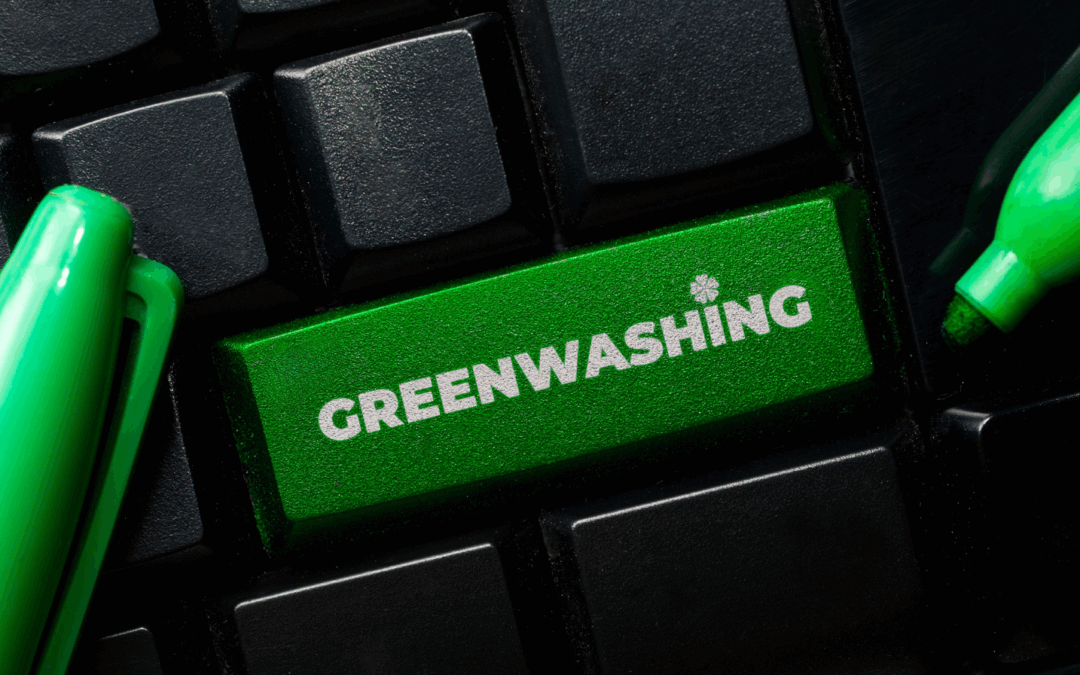
Promises of “eco-friendly” products and “sustainable” services have become a common feature of corporate marketing in recent years. Yet not all of them are justified. The European Union recognizes that misleading environmental claims can harm not only consumers but also public trust in genuinely responsible business practices. For this reason, it adopted Directive (EU) 2024/825 of the European Parliament and of the Council of 28 February 2024, which significantly changes the rules of the game.
This new legal framework, effective as of 26 March 2024, introduces stricter conditions for the use of environmental claims in advertising and product labeling. Its aim is clear: to create a credible and transparent environment in which greenwashing becomes a thing of the past. Member States must implement it by March 2026.
What Is Greenwashing?
Greenwashing — the deliberate creation of a false impression of environmental responsibility by producers — has become a global issue in recent years. According to the United Nations, it represents the systematic exploitation of growing public sensitivity to climate and environmental concerns for marketing gain, often concealing the real negative impact of products or production processes on the environment. The Earth Day Network warns that greenwashing is not only about misleading consumers but also about slowing down climate solutions, as it distorts market behavior and undermines public trust in truly sustainable initiatives.
The Most Common Forms of Greenwashing
-
Vague or general claims: Terms such as “green,” “eco-friendly,” or “climate neutral” are often used without any evidence or context. They are too broad and cannot be easily verified.
-
Focusing on one aspect: A company may highlight one environmental benefit (e.g., recycled packaging) while hiding the fact that the product itself is environmentally harmful (e.g., contains toxic substances).
-
Self-created certifications: Some businesses create their own environmental labels and certifications that appear credible but lack any independent verification.
-
False narratives or emotional appeals: Ads showing nature, animals, or children combined with the color green can evoke a sense of sustainability without any real basis.
Why Is Greenwashing a Problem?
The most serious consequences include:
-
Misleading consumers who wish to act responsibly but end up supporting unsustainable business practices;
-
Undermining trust in genuine ecological initiatives and certification schemes — once consumers can’t tell what’s real, they may stop trying to make sustainable choices altogether;
-
Slowing climate progress, by diverting attention from systemic change to the illusion of “green consumption.”
The EU’s Response
In response, the EU is tightening the rules for using environmental claims such as “climate neutral,” “eco-friendly,” or “green product.” The directive prohibits the use of generic environmental claims without clear, independently verifiable evidence. All claims must be specific, measurable, and must clearly indicate whether they apply to the entire product or only to one of its components. Claims based on carbon offsetting systems (offsets) are strictly regulated — without transparent calculation and verification by independent bodies, they are not permissible.
The directive also bans environmental labels that fail to provide consumers with clear information about their origin, criteria, and oversight. This prevents companies from creating their own pseudo-certifications that falsely suggest exceptional ecological performance.
This initiative reflects a broader global trend of strengthening climate regulation. The UN’s 2022 recommendations call for unified standards for declaring carbon neutrality and warn against misuse of the term “net-zero”, which is often applied without genuine emission reductions.
From a legal standpoint, the directive not only protects consumers, but also promotes fair competition by eliminating advantages for companies that dishonestly advertised their products’ environmental qualities. More broadly, it signals a cultural shift — treating sustainability not as a marketing tool, but as an integral part of business conduct.
Author of article